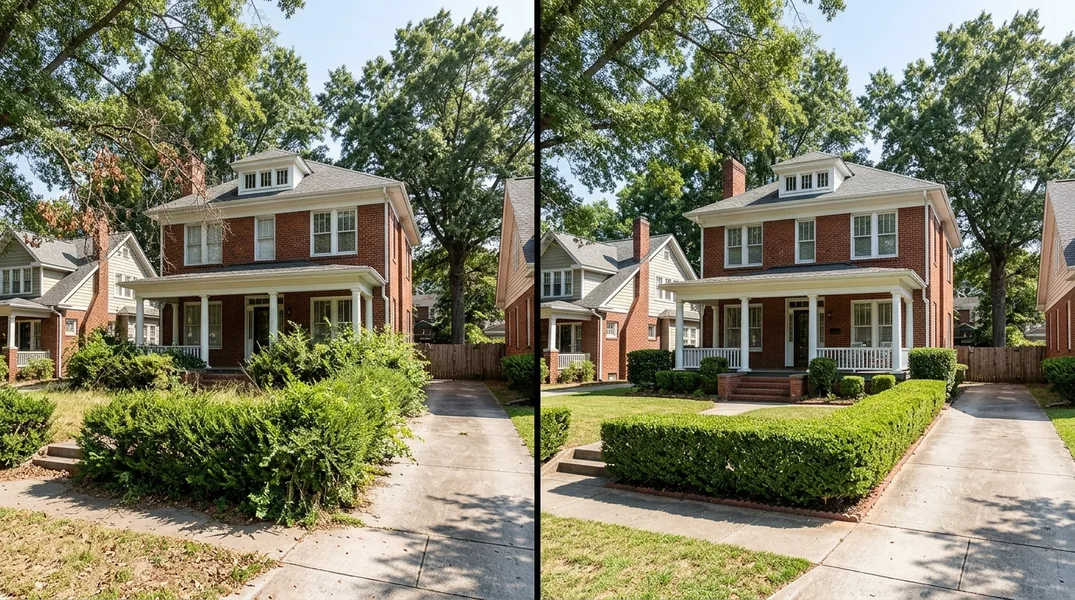
Understanding the Difference: Tree Trimming vs Tree Removal
When you look at a struggling tree in your yard, the first question that comes to mind is often simple: does it need to go, or can it be saved? The answer isn't always obvious, and that's where understanding the difference between Tree Trimming & Pruning and Tree Removal becomes critical for homeowners in Greensboro.
Tree Trimming & Pruning is a restorative practice designed to improve the health, appearance, and safety of your trees. When arborists trim branches, they remove dead wood, improve air circulation, reduce weight distribution, and encourage new growth. This process can add years to a tree's life and enhance the overall structure of your landscape. Removal, on the other hand, is a permanent solution reserved for trees that pose a genuine safety risk or have declined beyond recovery. The key difference lies in intent: trimming preserves and improves, while removal eliminates the problem entirely.
For most homeowners, the goal should always be preservation when possible. Mature trees provide shade, increase property value, improve air quality, and create natural beauty that takes decades to replace. The Piedmont region of North Carolina, where Greensboro is located, is home to many native shade trees like oaks, maples, and hickories that are well-adapted to our climate. These trees deserve a chance to recover whenever the situation allows.
Signs Your Tree Might Be Saveable Through Trimming
Not every tree showing signs of stress needs to be removed. Many common problems that alarm homeowners can actually be addressed through proper Tree Trimming & Pruning techniques. If your tree has dead branches scattered throughout its canopy, this is often a sign of natural shedding or minor stress, not terminal decline. Removing these dead limbs improves the tree's appearance and allows it to redirect energy to healthy growth.
Branches that are rubbing against each other, crossing over the main trunk, or growing inward toward the center of the tree are also candidates for trimming rather than removal. These structural issues can be corrected through selective pruning that opens up the canopy, improves light penetration, and reduces the risk of branch failure during storms. Similarly, if your tree is overgrown and blocking your view, damaging your roof, or interfering with power lines, professional trimming can solve these problems without removing the tree entirely.
Trees that have experienced storm damage, insect infestations, or disease may also be candidates for recovery. If the damage is limited to certain branches or sections of the tree, removal of the affected areas combined with proper care can allow the tree to compartmentalize the wound and continue growing. However, this assessment requires expertise, which is why a professional Greensboro arborist should evaluate the situation before any major decisions are made.
Hazard Tree Assessment in Greensboro: When Removal Becomes Necessary
There are times when Tree Removal is not just an option but a responsibility. A hazard tree assessment is the professional process of evaluating whether a tree poses a genuine risk to people, property, or structures. This assessment goes beyond appearance and considers factors like tree health, structural integrity, proximity to homes and power lines, soil stability, and weather exposure. GreensboroTree Service conducts thorough hazard tree assessments to help homeowners understand their actual risk level.
Several red flags indicate that a tree may need removal. If a tree is completely dead or dying (showing no green foliage for an entire season), removal is typically the safest choice. Trees with major trunk cracks, hollow sections, or significant lean may have structural failure risk that trimming cannot address. If a tree has been struck by lightning, has extensive root damage, or is infested with wood-boring insects throughout its structure, the damage is often too severe to reverse. Additionally, trees growing directly over your home, garage, or high-traffic areas become liabilities if their condition is questionable.
Disease is another critical factor. Some tree diseases in the Piedmont region, such as certain fungal infections or pest infestations, can spread to other trees in your yard. If a tree is diseased beyond the point where pruning can contain the problem, removal protects your entire landscape. The goal of a hazard tree assessment is to distinguish between trees that can be managed through trimming and those that genuinely need to be removed for safety reasons.
How Professional Arborists Decide: The Assessment Process
When GreensboroTree Service evaluates your tree, we're not making a snap judgment based on appearance alone. Professional arborists follow a systematic process that considers multiple factors. We begin by examining the tree's overall health, looking for signs of vigor such as new growth, leaf color, and branch density. We assess the structural integrity by checking for cracks, cavities, weak branch angles, and signs of decay. We also consider the tree's location relative to structures, power lines, and areas where people spend time.
Environmental factors matter too. Trees stressed by drought, poor soil, compaction, or previous damage are more vulnerable to future problems. A tree that survived one storm may not survive the next if its structural integrity has been compromised. Our arborists also consider the species and age of the tree. Some species are naturally prone to certain diseases or structural weaknesses in our climate, while others are hardy and long-lived. A young tree with a treatable problem is a better candidate for preservation than an old tree with multiple serious issues.
This comprehensive approach means that two trees showing similar symptoms might receive different recommendations. One might be trimmed and treated, while the other might be recommended for removal. That's because the decision is based on the whole picture, not just what's visible on the surface. When you call GreensboroTree Service at (743) 222-3017, we can schedule a hazard tree assessment and explain our findings in detail, so you understand exactly why we're recommending either preservation or removal.
The Cost and Timeline: Trimming vs Removal
Budget is a legitimate concern for homeowners, and it's natural to wonder whether trimming or removal makes more financial sense. Generally, Tree Trimming & Pruning is less expensive than removal, especially for smaller to medium-sized trees. A professional trimming job might cost anywhere from a few hundred to a couple thousand dollars depending on tree size, complexity, and how much work is needed. Regular trimming every few years is also a preventive investment that can extend your tree's life and reduce the risk of future problems.
Tree Removal involves more labor, equipment, and often disposal costs, making it a more significant expense. However, when a tree truly is hazardous, the cost of removal is far less than the potential cost of property damage or injury if the tree fails. Additionally, after removal, you may need Stump Grinding to fully clear the area, which is an additional service. For specific information about pricing for your situation, we recommend requesting a free estimate.
The timeline also differs. Trimming can often be completed in a single day or over a couple of visits. Removal typically takes longer, especially if the tree is large or in a tight space. From a long-term perspective, investing in preventive trimming now can save you from the larger expense and disruption of removal later. This is why many homeowners develop an ongoing relationship with their local arborist, scheduling regular maintenance that keeps trees healthy and safe.
Taking Action: Getting a Professional Assessment
If you're uncertain about whether your tree should be trimmed or removed, the best course of action is to get a professional opinion from someone with real expertise. Guessing wrong can be costly, either in terms of money spent on unnecessary removal or safety risks from keeping a hazardous tree. GreensboroTree Service has been serving the Greensboro area with professional tree care for years, and we understand the specific challenges that come with maintaining trees in the Piedmont region.
Reach out to us today at (743) 222-3017 or visit our website to request a free estimate. During your consultation, we'll assess your tree, explain what we find, and give you clear recommendations backed by professional knowledge. Whether your tree can be saved through trimming or needs to be removed, you'll have the information you need to make the right decision for your home and landscape. Don't let uncertainty keep you from addressing a potential problem, and don't rush into removal if your tree can be preserved. Let the professionals help you decide.
Looking for a professional tree service in Greensboro? GreensboroTree Service responds fast for all your tree service needs.
Get a Free QuoteOur services: Tree Removal · Tree Trimming & Pruning · Stump Grinding